
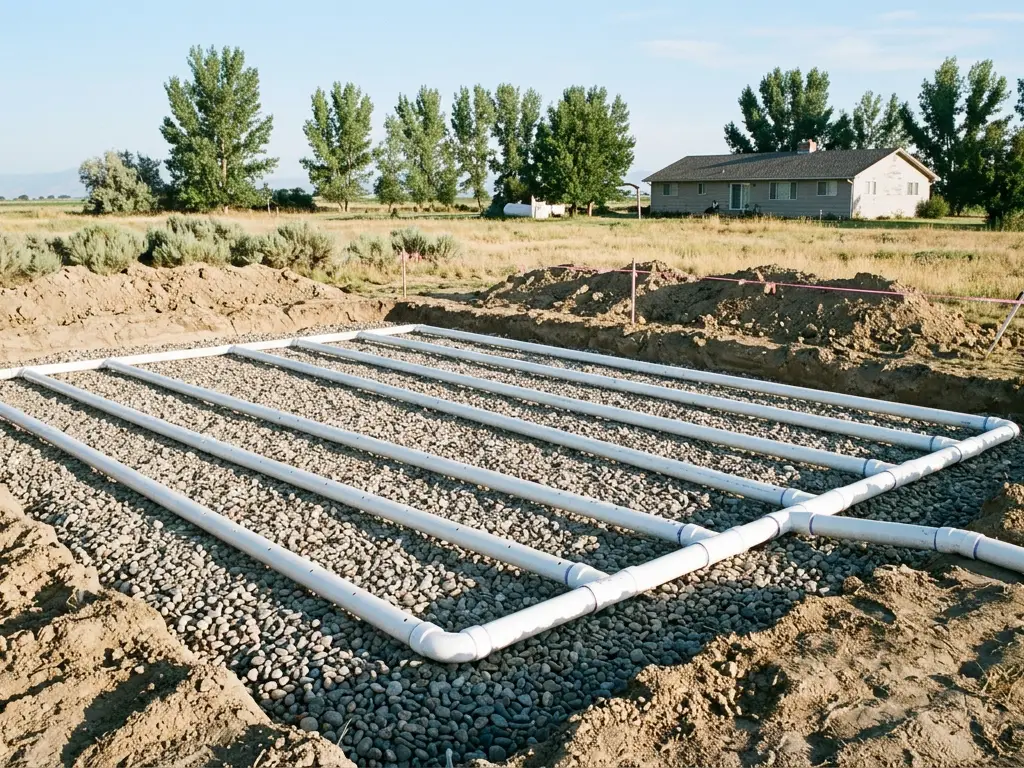
A new soil treatment area, designed for the ground it sits in
Greeley Quality Septic Leach Field Replacement in Greeley
When a field has stopped taking water, the fix is a new one, sized and designed for the soil on your lot.
- Greeley and nine towns within 20 miles
- Written price before any digging
- Licensed, insured local contractors
- Weld and Larimer County rules covered
Greeley Quality Septic arranges leach field replacements around Greeley, from the soils evaluation and the county permit to the new field itself. A replacement is the most expensive septic job most homeowners ever face, and the one most shaped by the ground: the same house can need a simple gravity field on one lot and an engineered system on the next.
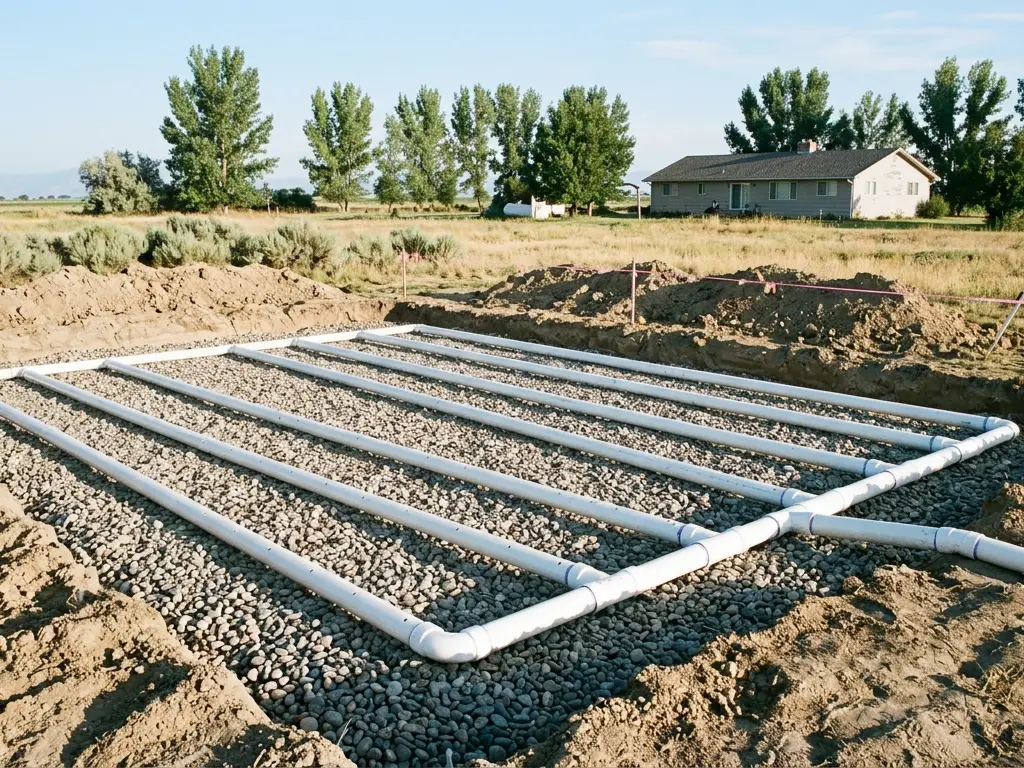
A failing field caught at the first wet patch can sometimes be repaired for $3,000 to $10,000; one left until sewage surfaces is a $22,000 to $29,000 replacement done in a hurry.
$22,000 to $29,000 for a new leach field
Replacing a leach field around Greeley typically runs $22,000 to $29,000, depending on the type of soil treatment area the site needs, which is the range a Northern Colorado septic installer publishes. That includes the excavation, the new field and the reconnection. The county repair permit is $1,100 in Weld and $1,320 in Larimer in 2026, and an engineered design, where required, adds to the total.
Get a price: (970) 442-7072Signs the field needs replacing, not repairing
- Water returns to the tank from every line, not just one
- The whole field area stays saturated through a dry spell
- Sewage surfaces in the yard or backs up into the house even after pumping
- The field has been repaired before and the problem came back
- A soils evaluation shows groundwater or clay right under the existing trenches
The steps, in order
- A site and soils evaluation: at least two soil profile test pits, or two pits and three percolation holes, dug where the new field will go and logged by an engineer, geologist or qualified soils technician.
- A design, with flow calculations and a site plan to scale. On many lots around Greeley the design has to come from a professional engineer.
- The county repair permit, issued after the county inspects the marked site. In Weld County that takes about five working days with a complete application.
- Installation, inspected by the county before backfilling, and by the design engineer too on an engineered system.
- A record drawing of the system as built, which goes on file with the county.
Gravity field or engineered system
A conventional field uses gravity trenches or beds of gravel or infiltration chambers. It works where the soil takes water at a reasonable rate and there is enough unsaturated depth below the trench.
Weld County requires an engineer-designed system where the design uses pressure distribution or flood dosing, where the soil is in the tighter or coarser classes its regulations list, where groundwater or another limiting layer is within four feet of the surface, or where the slope is over 30 percent. Those systems often add a pump tank, small pressurized laterals and sometimes a treatment unit. See engineered systems for what that involves.
Not sure what the system needs? Describe what you are seeing and get a straight answer on what it usually takes.
Call (970) 442-7072What the soil says around Greeley
USDA rates each soil for conventional septic absorption fields. Sampled across 25 points per town, most of the ground around Severance and on the terraces north of Greeley comes back "not limited", which is good news for a gravity field. Around Berthoud, Loveland and Fort Collins the Nunn and similar clay loams mostly come back "very limited" for slow water movement, so a replacement there is far more likely to be engineered and larger. River-bottom ground along the Cache la Poudre and South Platte brings flooding and shallow groundwater into it.
Those ratings describe conventional fields only. They are a guide to what the soils evaluation will probably find, not a substitute for it.
Where the new field can go
Setbacks decide where there is room. Under Weld County's rules a soil treatment area must sit at least 100 feet from a well and 50 feet from a lake, stream or irrigation ditch, and the tank 50 feet from a well. On acreage with a domestic well and a ditch along the property line, those circles can leave very little room, and the site plan is where that gets solved.
Replacing in winter
Fields can be replaced in winter, but frozen ground and test pits that fill with water slow everything down. If the old field is limping, getting the soils evaluation done before the ground freezes keeps the options open.
Call (970) 442-7072Questions people ask
How much does a new leach field cost near Greeley?
Typically $22,000 to $29,000, depending on the type of field the soil needs, plus the county permit and any engineered design.
What are the signs a leach field needs replacing?
Water returning to the tank from every line, a saturated field in dry weather, and backups that continue after pumping or after a repair.
Do I need an engineer to replace a leach field in Weld County?
If the design uses pressure distribution, the soil is a listed type, groundwater is within four feet, or the slope is over 30 percent.
How far does a leach field have to be from a well?
At least 100 feet under Weld County's setback table, and 50 feet from a lake, stream or irrigation ditch.
How long does a leach field replacement take?
The permit takes about five working days after a complete application in Weld. The soils work and design come first, and the installation itself is usually a few days.
Often done together
-
Engineered septic systems
Pressure-dosed fields, pump tanks and treatment units, designed and stamped by a professional engineer for the lots where a simple gravity field will not work.
-
Perc test and soil evaluation
Before any new system or replacement field, Colorado's counties want to see the soil. This is where that happens.
-
Septic system replacement
When both the tank and the field are past saving, the whole system is replaced to today's Colorado and county standards.
Talk it through before anyone digs
Say what the house is doing, how old the system is and when the tank was last pumped. You will hear what the job usually involves, what it tends to cost, and whether it needs digging at all.
Call (970) 442-7072