
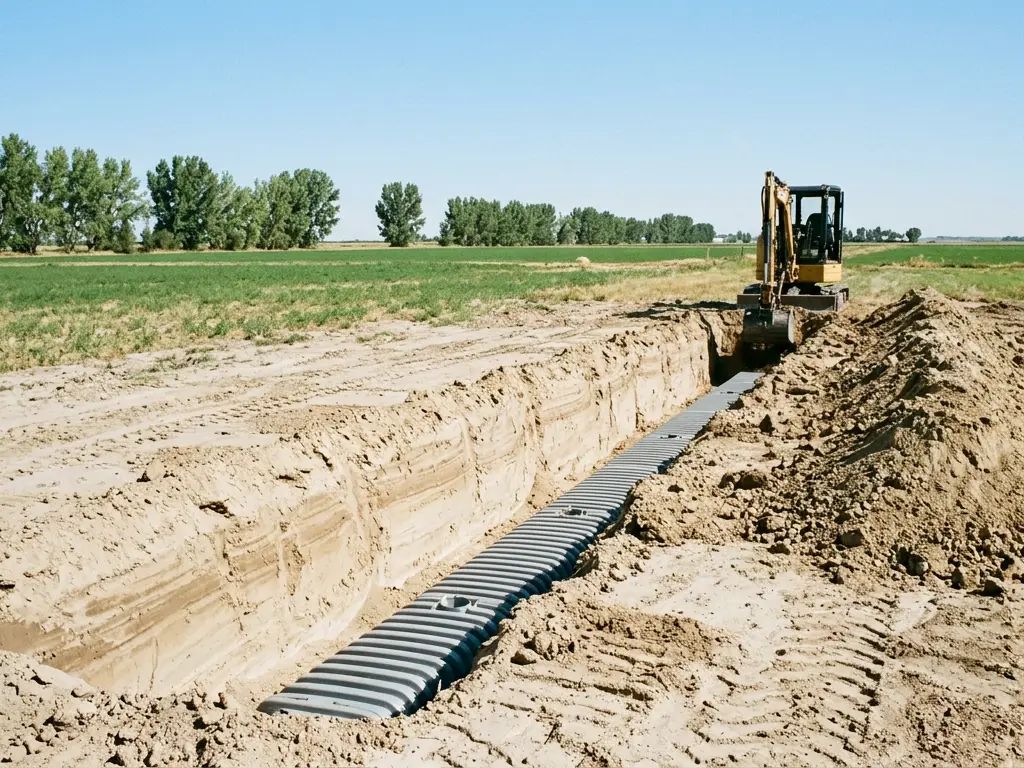
Saving part of a field before replacing all of it
Greeley Quality Septic Leach Field Repair in Greeley
When one leach line fails, or a field starts to struggle, there is often still something worth saving.
- Greeley and nine towns within 20 miles
- Written price before any digging
- Licensed, insured local contractors
- Weld and Larimer County rules covered
Greeley Quality Septic arranges leach field repairs around Greeley for fields that are struggling but not finished: one overloaded line, a crushed pipe, a field that floods only in irrigation season. Colorado's rules call the leach field the soil treatment area, and in both Weld and Larimer counties any work on it needs a permit, so a repair here is a planned job, not a quick patch.
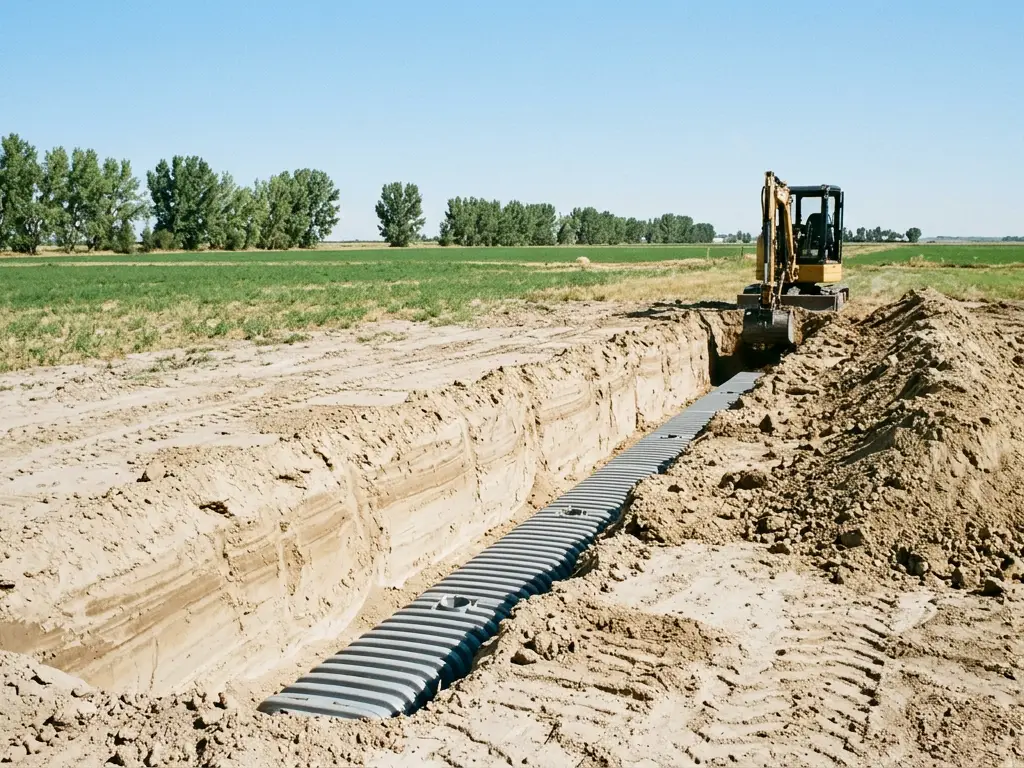
Fixing a single failed leach line typically costs $3,000 to $10,000; letting the rest of the field take its load until it all fails means a $22,000 to $29,000 replacement instead.
$3,000 to $10,000 for a partial repair
Repairing or partly replacing a leach field around Greeley typically runs $3,000 to $10,000, the range a Fort Collins septic repair company publishes, and more where the work is extensive. On top of that is the county permit: $1,100 for a repair in Weld County and $1,320 for a major repair in Larimer County under their 2026 fee schedules, plus the site and soils evaluation the permit needs.
Get a price: (970) 442-7072Signs the leach field is struggling
- Water flowing back into the tank from the field as soon as it is pumped
- Wet, spongy or sunken ground over the field in a dry week
- A bright green stripe over one line in late summer
- Sewage smell in the yard after heavy use or rain
- Backups that come with irrigation season or a wet spring and fade later
What a leach field repair can be
Replacing one line
If a single trench has failed, usually because a distribution problem overloaded it, the failed line can be replaced or a new line added, and the flow rebalanced so the rest of the field shares the load.
Fixing the pipe, not the soil
Sometimes the soil is fine and the pipe is not: crushed by a vehicle, broken by roots, or disconnected at the distribution box. That is the cheapest field repair there is.
Resting the field
Cutting water use, fixing leaky fixtures and pumping the tank can give a tired field time to recover, especially if the cause was a short spell of overload. It is worth trying when the soil is still taking water.
What the county needs first
In Weld County, replacing or upgrading any part of the soil treatment area is a repair permit, $1,100 in 2026. The application needs a site and soils evaluation with at least two soil profile test pits, or two pits and three percolation holes, a site plan drawn to scale, and a design. The county inspects the site before issuing the permit, which takes about five working days once the application is complete, and inspects the work before it is backfilled.
An engineer has to design the repair if it uses pressure distribution, if the soil type is one of the classes the county lists as needing engineering, if groundwater or a limiting layer is within four feet of the surface, or on slopes over 30 percent. On the clay west of Greeley that often applies.
Not sure what the system needs? Describe what you are seeing and get a straight answer on what it usually takes.
Call (970) 442-7072Why fields fail around Greeley
USDA soil ratings around Greeley explain most of it. West toward Windsor, Johnstown and Berthoud, the soils are clay loams that take water slowly, so a field has to be large and stay clean to work. Along the Cache la Poudre and the South Platte, the problem is the opposite: shallow groundwater and flooding, which leave no unsaturated soil below the trench to treat the effluent. On irrigated land the water table can rise each summer when the ditches run.
Add solids from a tank that was not pumped, and a field on either kind of ground fails years early.
Repair or replacement
The honest test is how much of the field still works. If most lines take water and one does not, a repair makes sense. If the whole area is saturated, or water comes back into the tank from every line, repairing it spends money on a system that will need a full leach field replacement anyway. A soils evaluation done for the permit usually settles the question.
Sewage surfacing in the yard
Keep people and pets off the wet area, stop using water where you can, and call. A pump-out buys time and shows whether water is returning from the field.
Call (970) 442-7072Questions people ask
How much does leach field repair cost around Greeley?
A partial repair typically runs $3,000 to $10,000, plus a $1,100 Weld County or $1,320 Larimer County repair permit.
What are the signs of a failing leach field?
Water flowing back into the tank after pumping, soggy or sunken ground over the field, a green stripe in a dry lawn, and a sewage smell outside.
Do I need an engineer to repair a leach field?
In Weld County, yes for pressure distribution, certain soil types, groundwater within four feet, or slopes over 30 percent.
Can a failing leach field be saved?
Sometimes. If the cause is one overloaded line or a broken pipe, a repair can work. A field saturated across its whole area usually needs replacing.
How long does a Weld County repair permit take?
About five working days once a complete application, with the soils evaluation and design, is in.
Often done together
-
Leach field replacement
When a field has stopped taking water, the fix is a new one, sized and designed for the soil on your lot.
-
Distribution box replacement
A distribution box splits the flow from the tank between the leach lines. When it tilts, cracks or clogs, one line takes everything and fails early.
-
Perc test and soil evaluation
Before any new system or replacement field, Colorado's counties want to see the soil. This is where that happens.
Talk it through before anyone digs
Say what the house is doing, how old the system is and when the tank was last pumped. You will hear what the job usually involves, what it tends to cost, and whether it needs digging at all.
Call (970) 442-7072