
When the soil needs a designed answer
Greeley Quality Septic Engineered Septic Systems in Greeley
Pressure-dosed fields, pump tanks and treatment units, designed and stamped by a professional engineer for the lots where a simple gravity field will not work.
- Greeley and nine towns within 20 miles
- Written price before any digging
- Licensed, insured local contractors
- Weld and Larimer County rules covered
Greeley Quality Septic arranges engineered septic systems around Greeley, for the lots where the county requires a professional engineer's design. On the clay loams west and south of the city, and on river-bottom ground with shallow water, that is a large share of replacements and new installations, so it is worth understanding what the word means before the quote arrives.
An engineered design typically costs $1,500 to $5,000, and skipping the engineer is not an option where the county requires one; a field installed without the right design fails early and brings back a $22,000 to $29,000 replacement.
$1,500 to $5,000 for the engineered design
The engineering design for a septic system in this area typically runs $1,500 to $5,000, depending on how complex the system and the site are, the range a Fort Collins septic company publishes for Larimer County. That is on top of the soils evaluation, typically $500 to $1,500, the county permit, and the installation itself. A full replacement for a three to five bedroom house typically runs $28,000 to $35,000, and engineered systems sit toward the top of that range or above it.
Get a price: (970) 442-7072Signs your site will need an engineered system
- Groundwater or a hard layer found within four feet of the surface in a test pit
- Heavy clay soil that the soils report puts in one of the restrictive classes
- An existing system with a pump tank and an alarm box on the house
- A lot that slopes steeply, more than about 30 percent
- Little room left between a well, a ditch and the property lines
When Weld County requires an engineer
Weld County's residential permit application lists the cases. An engineer-designed system is required where the design uses flood dosing or pressure distribution, where the soil falls in types 0, 3A, 4, 4A or 5 under the county's soil table, where groundwater or another restrictive layer is within four feet of the existing ground surface, and where the ground slopes more than 30 percent.
Those soil types sit at the two ends of the table. Type 0 is at the coarse end, where effluent can pass through too fast to be treated. Types 3A through 5 are at the tight end, the clay loams and clays where it passes too slowly. Both ends need a designed system, for opposite reasons.
What an engineered system usually involves
A pump tank and pressure distribution
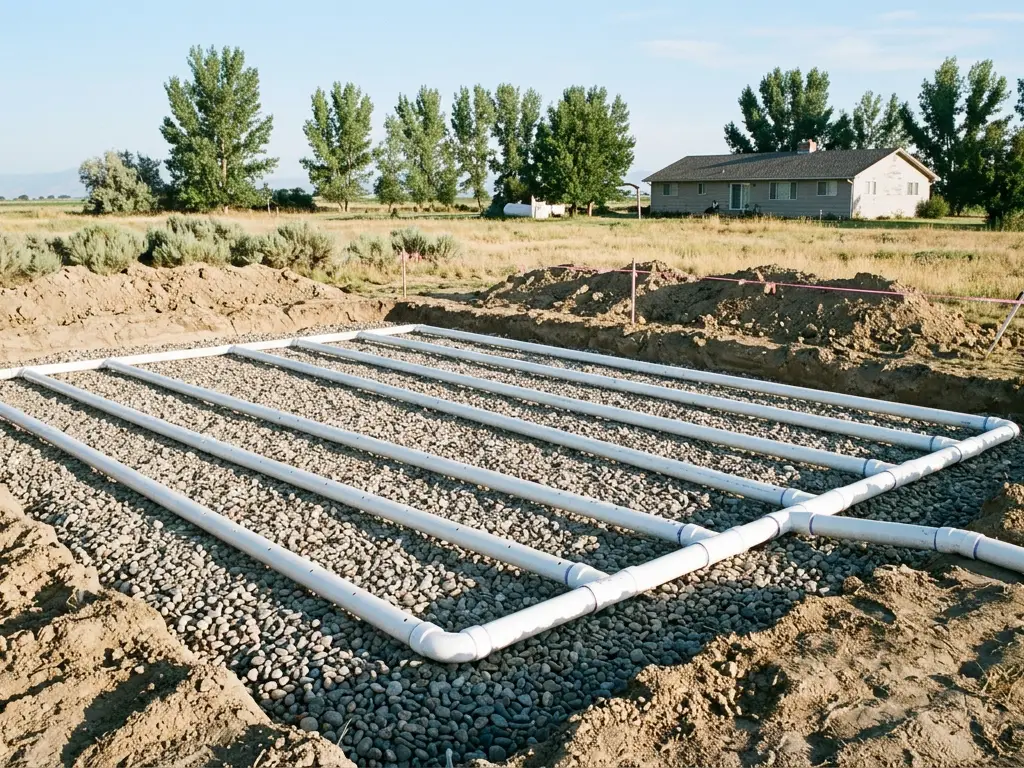
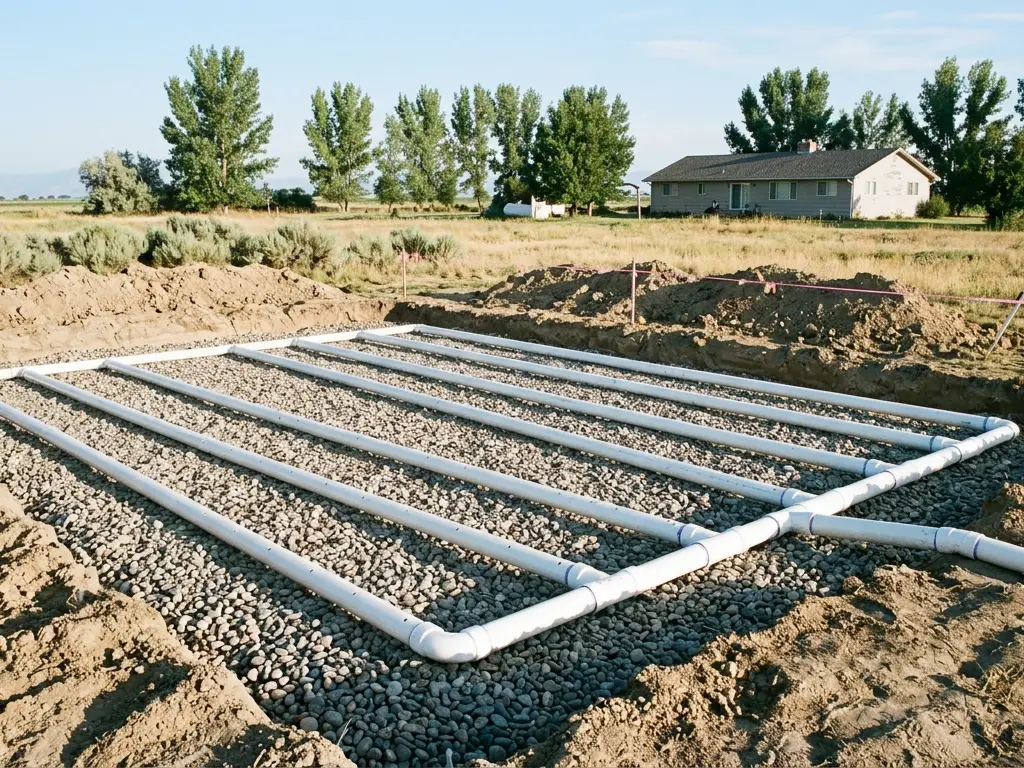
Instead of letting effluent trickle by gravity into the first part of a trench, a pump in a second tank doses it under pressure through small-diameter laterals with drilled orifices, so the whole field gets an even share every cycle. That gets far more out of slow soil.
Higher-level treatment
Some designs add a treatment unit or a sand filter that cleans the effluent before it reaches the soil. Colorado's rule lets better-treated effluent go into a smaller field, which matters on a tight lot.
Inspection by the engineer
In Weld County, an engineered system is inspected before backfilling by the county and by the design engineer, who then sends a signed letter approving the installation.
Not sure what the system needs? Describe what you are seeing and get a straight answer on what it usually takes.
Call (970) 442-7072Why so many lots here need one
Sampled across 25 points per town, USDA rates most ground around Berthoud, Fort Collins and Loveland "very limited" for conventional absorption fields, almost always for slow water movement in Nunn and similar clay loams. In Milliken and Evans, low ground near the Big Thompson and South Platte adds flooding and a shallow water table. Those are exactly the conditions the engineer requirement exists for.
Living with a pumped system
An engineered system has more parts: a pump, floats, a control panel and an alarm. The alarm means the water level is high; the tank has some reserve, but the pump or a float usually needs attention soon. The alarm and pump repair page covers what to do when it sounds.
Alarm on a pressure system
Cut water use and check the breaker for the pump circuit. If the breaker is on and the alarm keeps sounding, the pump or a float has likely failed. Call; the tank's reserve is limited.
Call (970) 442-7072Questions people ask
How much does an engineered septic design cost?
Typically $1,500 to $5,000 for the design, plus the soils evaluation, permit and installation.
When does Weld County require an engineered septic system?
For pressure distribution or flood dosing, soil types 0, 3A, 4, 4A or 5, groundwater within four feet of the surface, or slopes over 30 percent.
What are the signs my lot needs an engineered system?
Shallow groundwater or a hard layer in a test pit, heavy clay, steep slope, or little room between wells and ditches.
Does an engineered system cost more to maintain?
A little. It still needs pumping, and the pump, floats and alarm add parts that eventually need replacing.
Who inspects an engineered septic system?
In Weld County, the county and the design engineer both inspect it before backfill.
Often done together
-
Perc test and soil evaluation
Before any new system or replacement field, Colorado's counties want to see the soil. This is where that happens.
-
Leach field replacement
When a field has stopped taking water, the fix is a new one, sized and designed for the soil on your lot.
-
Septic alarm and pump repair
Engineered and lift systems rely on a pump, and the alarm is how the system tells you the pump has stopped keeping up.
Talk it through before anyone digs
Say what the house is doing, how old the system is and when the tank was last pumped. You will hear what the job usually involves, what it tends to cost, and whether it needs digging at all.
Call (970) 442-7072