
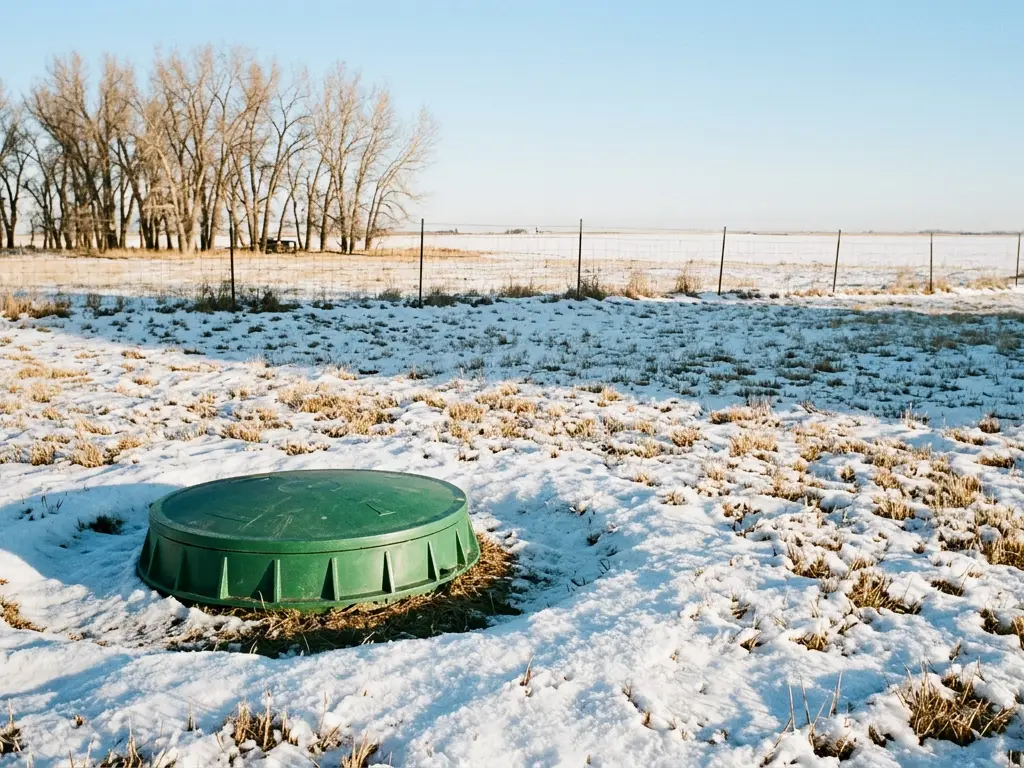
Finding the lid before anyone digs up the yard
Greeley Quality Septic Septic Tank Locating in Greeley
Plenty of houses around Greeley have a septic tank nobody has seen in years. Finding it is the first step of every other job.
- Greeley and nine towns within 20 miles
- Written price before any digging
- Licensed, insured local contractors
- Weld and Larimer County rules covered
Greeley Quality Septic arranges septic tank locating around Greeley for homeowners who need a pump-out, an inspection or a sale and do not know where the tank is. On acreage that has changed hands a few times, with lids buried under a foot of clay and lawn, that is common, and it is the reason a simple pump-out sometimes turns into an afternoon.
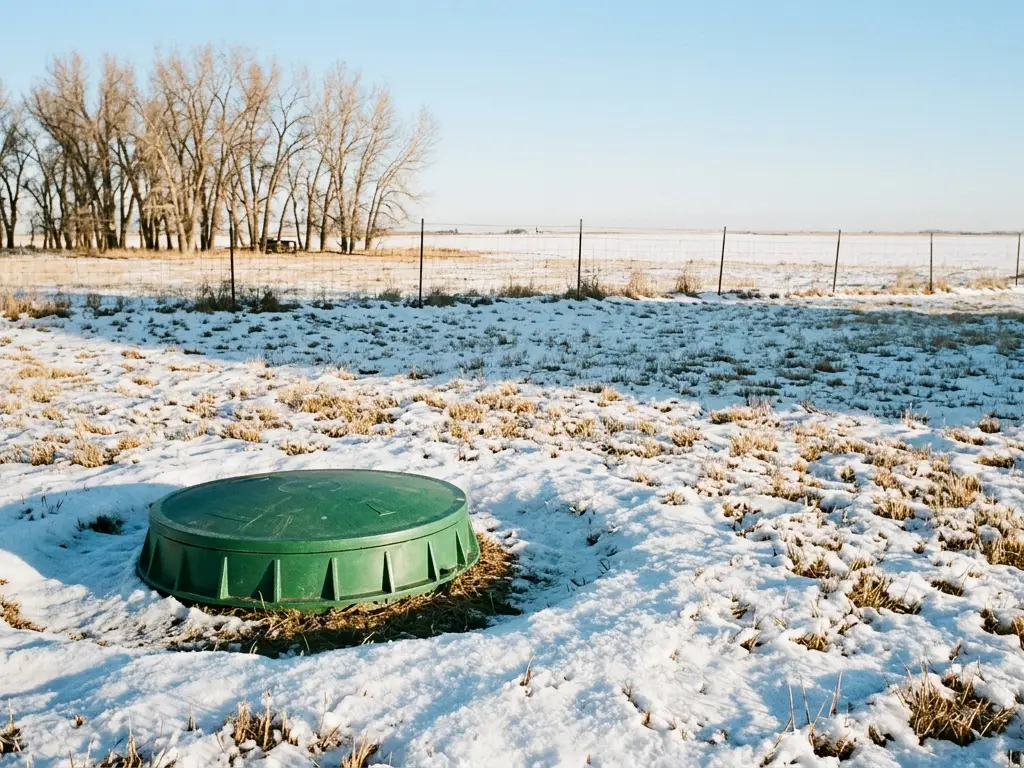
Finding a tank typically costs $300 to $600; guessing with a backhoe can crush a lid or a line and turn it into a $300 to $800 repair before the real job has started.
$300 to $600 for one to two hours of locating and digging
Locating and uncovering a septic tank around Greeley is usually billed by the hour, and a Northern Colorado septic company publishes $300 an hour for locating and dig work. Most tanks are found and opened in one to two hours, so $300 to $600 is typical. A tank under a patio or a driveway, or with no permit drawing to go on, takes longer.
Get a price: (970) 442-7072Signs you need the tank located
- Nobody knows where the lid is, and there is no riser showing
- You are buying or selling and the inspector needs the tank opened
- A pump-out is due and the last company had to dig
- You are planning a garage, a fence or trees and need to keep clear of the system
- The yard has been landscaped since the system went in
Start with the permit file
If the system was installed under a permit, the county may have a drawing of it. Weld County's existing septic permits are on record with the Environmental Health division and searchable through the county's property portal by parcel. A drawing that shows the tank 12 feet off the northeast corner of the house saves most of the search. Weld also offers a $25 statement of existing, a record of what is on file for a property.
Older systems, especially those installed before the county's records were kept carefully, may have nothing on file at all.
How a tank is found without a drawing
Weld County's own advice is the method most crews use. Start where the sewer pipe leaves the house, in the basement or crawl space, and note the direction. Then go outside and probe the ground with a thin metal rod 5 to 15 feet from the foundation along that line. The tank is usually there. The field is beyond it.
Where probing does not find it, a crew can push a small transmitter down the sewer line from a cleanout and trace its signal from the surface, or run a camera to measure the distance.
Not sure what the system needs? Describe what you are seeing and get a straight answer on what it usually takes.
Call (970) 442-7072Once it is found
Draw a map and keep it with the house papers, measured from two fixed corners. Weld County suggests exactly that, because it saves time on every future visit. Better still, have a riser installed that brings the lid to the surface, so the next pump-out needs no digging at all.
Locating in winter
A light snow can give a tank away. Tanks are warmer than the ground around them, and snow often melts first over a shallow lid. Frozen ground, on the other hand, makes probing and digging slow, and around Windsor and the plains east of Greeley the frost can go well over a foot down in a cold January. If a sale or an inspection is coming, finding the tank before the ground freezes is the cheaper option.
Inspector arriving tomorrow
Call with the address. If the parcel has a Weld County permit on file, the drawing may be found before anyone arrives, and the dig can start in the right place.
Call (970) 442-7072Questions people ask
How much does it cost to locate a septic tank?
Typically $300 to $600, billed at about $300 an hour, for most tanks found and uncovered in one to two hours.
How do I find my septic tank myself?
Find where the sewer pipe leaves the house, then probe with a thin rod 5 to 15 feet from the foundation along that line. Check the county permit file first.
What are the signs of where the septic tank is?
A patch where snow melts first, a slight dip or rise in the lawn, a cleanout pipe near the house, or greener grass over the field beyond it.
Can I look up my septic permit in Weld County?
Yes. Existing permits are on record with the county and searchable through its property portal by parcel.
Should I put a riser on my septic tank?
It saves digging at every pump-out and every inspection, and makes the tank easy to find.
Often done together
-
Septic tank pumping
Emptying the sludge and scum layers before they reach the leach field, on a schedule set by the tank and the household.
-
Septic inspection
A look at every part of the system, from the pipe leaving the house to the leach field, with a written result.
-
Septic repair
Most septic systems that fail early fail because a small part broke and nobody noticed. Repairs are how you keep a $500 problem from becoming a $25,000 one.
Talk it through before anyone digs
Say what the house is doing, how old the system is and when the tank was last pumped. You will hear what the job usually involves, what it tends to cost, and whether it needs digging at all.
Call (970) 442-7072