
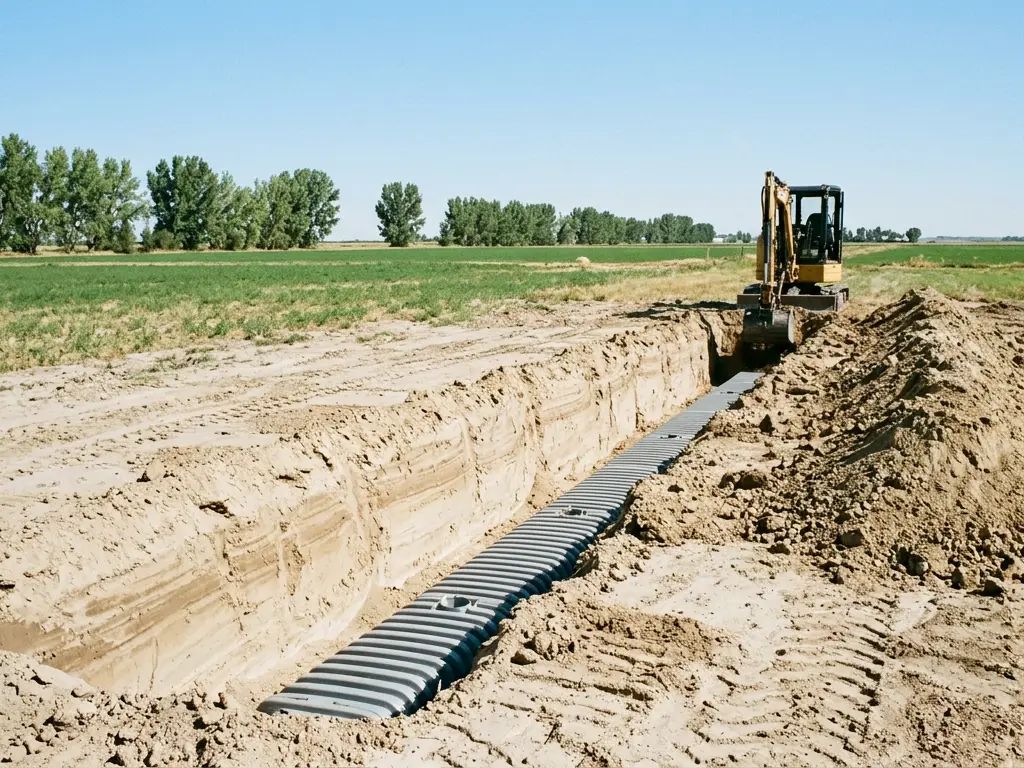
What the house and the yard are telling you
Greeley Quality Septic Guide to the Signs Your Septic System Is Failing Around Greeley
Septic systems rarely fail all at once. They send signals for months, and around Greeley some of those signals follow the irrigation season.
- Greeley and nine towns within 20 miles
- Written price before any digging
- Licensed, insured local contractors
- Weld and Larimer County rules covered
Greeley Quality Septic hears the same descriptions on most calls: the drains are slow, there is a smell, part of the yard is wet. This guide goes through the signs in the order people usually notice them, what each one most likely means, and which ones can wait a week and which cannot. Weld County lists most of these as the warning signs of a failing system, and adds an important caution: a system can also fail without any of them.
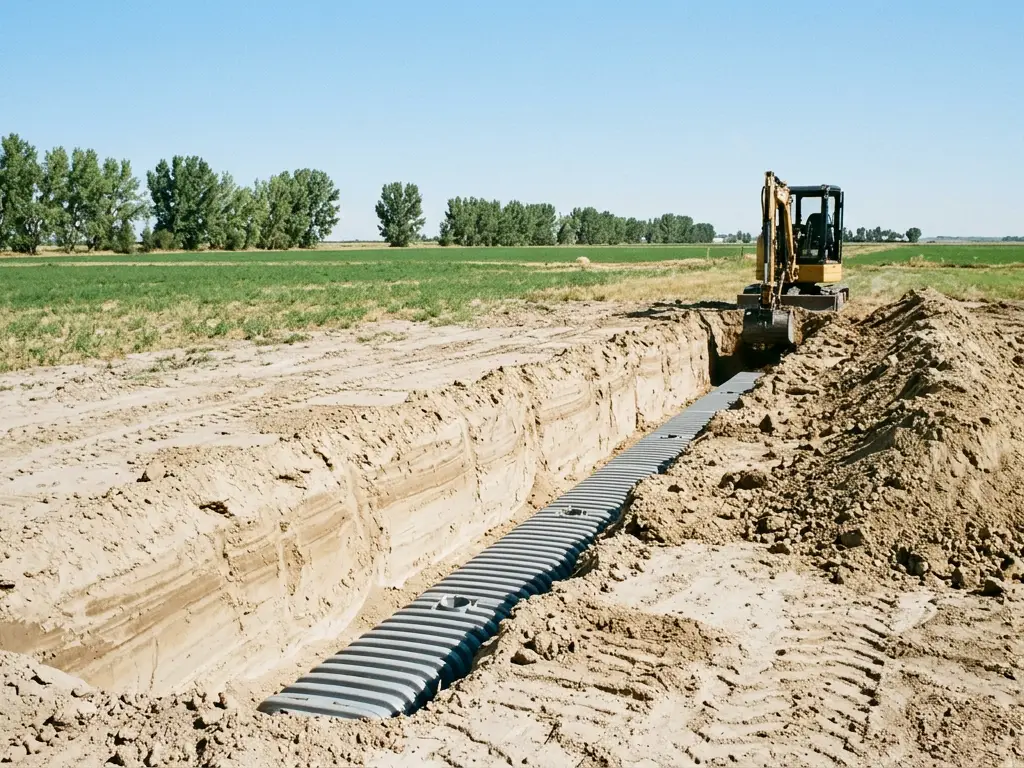
Inside the house
Every drain is slow, not just one
A single slow sink is a plumbing clog. Every fixture slowing at once points downstream, at the tank or the field. If the tank has not been pumped in years, that is the first thing to rule out.
Gurgling
Gurgling in a tub or a toilet when the washer drains means air is being pushed back through water that cannot flow away quickly. It is often the earliest sign of a tank near full or a field that is slowing.
Water coming up in the lowest drain
Sewage in a basement floor drain or the lowest shower means the system cannot take any more water. Stop using water and call. See septic backup for what to do first.
A sewage smell indoors
A smell inside can be a dry trap or a vent problem, but combined with slow drains it usually means the system is backing up.
Outside, over the tank and the field
Wet or mushy ground
Ground over the field that stays soft in a dry week means effluent is coming to the surface instead of soaking in. It is the clearest single sign of a failing field.
Grass greener and faster than the rest of the lawn
In a dry Colorado August, a bright green stripe over the field is effluent feeding the grass from just below the surface. A stripe over one line and not the others often means a distribution problem.
Smell in the yard
A sewage smell near the tank or the field, worse on still evenings, means gases or effluent are escaping where they should not.
Settling or sinking
Sinking ground over a tank can mean a failing lid or a collapsing old tank. Keep people and vehicles off it.
Not sure what the system needs? Describe what you are seeing and get a straight answer on what it usually takes.
Call (970) 442-7072Signs that follow the season
Around Greeley the irrigation season changes the ground. Ditches run from spring into fall, and on low land near them and near the Cache la Poudre and South Platte the water table rises. A field on that ground can work in winter and struggle in June, so backups that come every summer and fade by October are a field telling you it sits too close to the water.
In Evans, along the South Platte, USDA soil ratings flag flooding and a shallow saturated zone on several of the points sampled around the city. On the clay loams west of Greeley, the seasonal sign is different: ponding over the field for days after a summer storm, because the soil takes water slowly.
Signs a pumper or inspector finds
Some of the most useful signs are only visible with the lid off, which is one reason Weld County recommends an annual inspection.
- Water flowing back into the tank from the field as soon as it is pumped
- A sludge layer far deeper than the pumping history explains
- A missing or broken outlet baffle
- A clogged effluent filter
- An alarm panel showing a high-water event on a pumped system
- Bacteria or nutrients turning up in a well water test
What each sign usually leads to
Slow drains and gurgling with a long-unpumped tank usually end with a pump-out and a check of the baffles. A smell near the tank with working drains often means a lid or baffle repair. A wet patch over one line suggests the distribution box. Water returning from the field, or a whole field that stays wet, means the field itself, and the conversation becomes a leach field repair or replacement.
What not to do
Do not keep pumping a failing field every few weeks and call it fixed; pumping buys days when the field is the problem. Do not pour additives in, which Weld County calls unnecessary. Do not drive on the field or let animals stand on it, which compacts the soil. And do not dig around a sinking lid.
Not sure what the system needs? Describe what you are seeing and get a straight answer on what it usually takes.
Call (970) 442-7072Signs it may not be the septic system
Not every slow drain is a septic problem. One slow sink or tub is usually a clog in that fixture's drain. A sewage smell indoors with every drain working can be a dry trap in a floor drain or a vent problem on the roof. And a house on public sewer has none of these septic causes at all, which is worth confirming on a utility bill before calling anyone.
What to tell the person on the phone
- Which drains are slow, and whether it is all of them or one
- Where water or smell appears, inside and outside
- When the tank was last pumped, and whether the house has a pump tank or an alarm
- Whether the problem comes and goes with rain, irrigation or heavy laundry
- Whether the parcel is in Weld or Larimer County, if you are selling
With those answers, the first conversation can usually narrow the cause to the tank, a part or the field, and give you a typical price before anyone arrives.
Questions people ask
What are the first signs of septic failure?
Slow drains throughout the house and gurgling after the washer drains are usually first, followed by smells and wet ground over the field.
How do I know if my leach field is failing?
Wet or spongy ground over it in dry weather, a green stripe in a dry lawn, a smell, and water returning to the tank after pumping.
Can a septic system fail without warning signs?
Yes. Weld County notes failures can happen without any of the usual signs, which is why it recommends regular inspections.
Why does my septic back up every summer?
Around Greeley, irrigation season raises the water table on low ground near ditches and rivers, saturating the field from below.
Will pumping fix a failing septic system?
It fixes a full tank. It does not fix a field that has stopped taking water.
Talk it through before anyone digs
Say what the house is doing, how old the system is and when the tank was last pumped. You will hear what the job usually involves, what it tends to cost, and whether it needs digging at all.
Call (970) 442-7072