
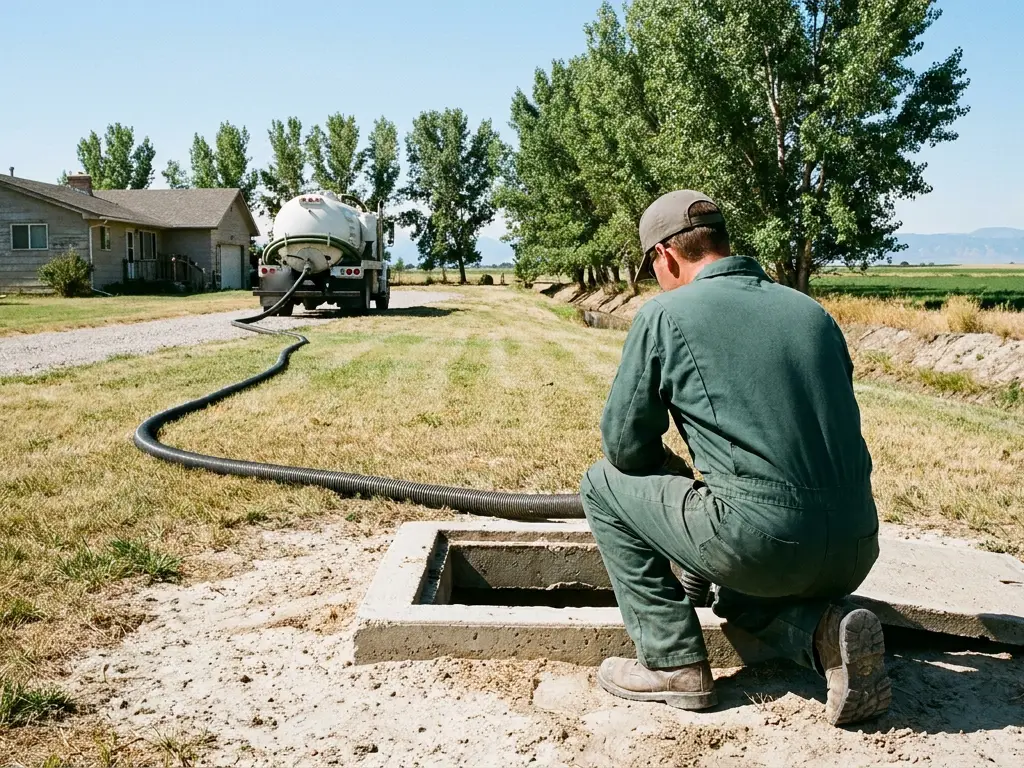
Setting a pumping schedule that fits your house
Greeley Quality Septic Guide to How Often to Pump a Septic Tank Around Greeley
Every two to four years is the usual answer. The better answer comes from measuring what is actually in your tank.
- Greeley and nine towns within 20 miles
- Written price before any digging
- Licensed, insured local contractors
- Weld and Larimer County rules covered
Greeley Quality Septic hears "how often should I pump?" more than almost any other question. The short answer around Greeley is every two to four years, which is what local pumping companies recommend. The useful answer is that your own interval depends on the tank, the household and what goes down the drains, and the way to find it is to measure the layers at each pump-out.
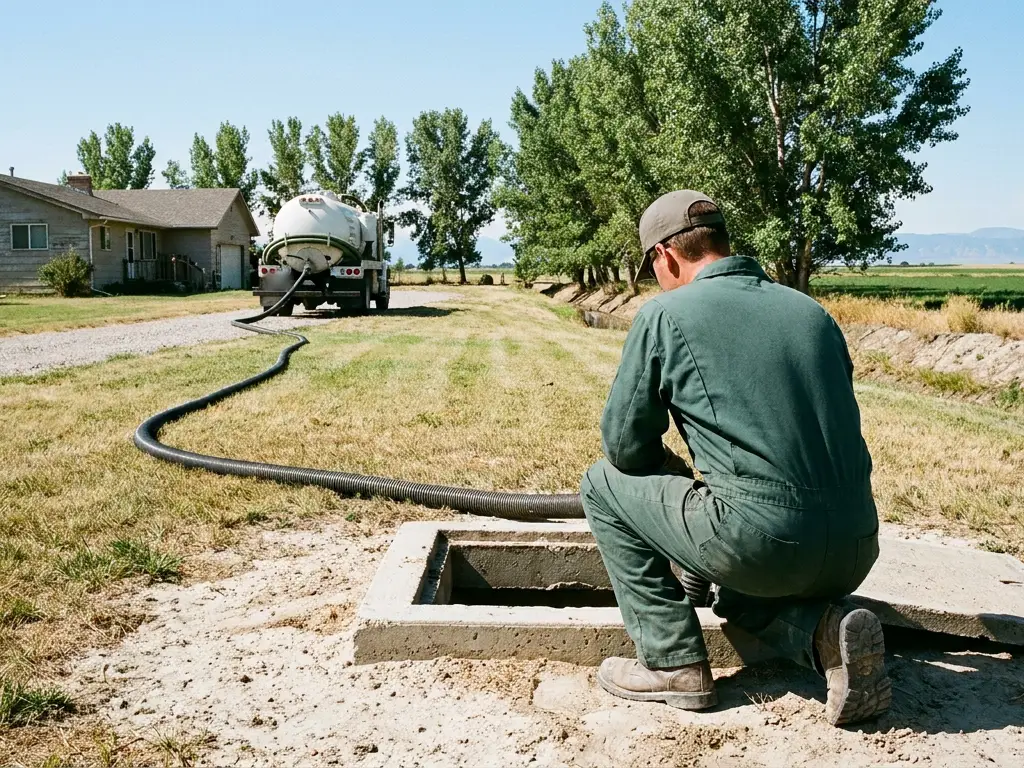
Why a tank needs pumping at all
A septic tank separates what comes out of the house into three layers. Grease and light solids float to the top as scum. Heavy solids sink to the bottom as sludge. The liquid in the middle flows out to the leach field. Bacteria break down some of the solids, but not all, so the scum and sludge layers grow until there is no room left for the liquid to settle.
When that happens, solids start leaving with the liquid and clog the soil in the field. A field clogged with solids cannot be fixed by pumping, and replacing it around Greeley typically runs $22,000 to $29,000.
The rule of thumb, and what changes it
Two to four years is a reasonable starting interval for a typical household. These things shorten it:
- More people in the house than the tank was sized for
- A garbage disposal, which adds a lot of solids
- A basement bedroom or apartment added since the system went in
- A tank smaller than today's rule, which is 1,000 gallons for two or three bedrooms and 1,250 for four
- Heavy laundry days, which push solids through before they settle
A retired couple on a 1,250 gallon tank may go longer than four years. A family of six with a disposal on a 1,000 gallon tank may need two.
Not sure what the system needs? Describe what you are seeing and get a straight answer on what it usually takes.
Call (970) 442-7072How to find your real interval
Weld County's own guidance is to measure. A pumper can push a clear tube through the layers to see the sludge and scum in cross-section, or use a stick with a crossbar to feel the bottom of the scum. As a rule, if the scum layer has reached within three inches of the bottom of the inlet baffle, the tank should be pumped.
Ask the crew to write down the sludge and scum depths at each visit, along with the date. After two pump-outs you can see how fast your house fills its tank, and set the interval from that rather than from a guess.
The best time of year to pump around Greeley
Late summer and fall
Usually the easiest. The ground is dry and unfrozen, lids are easy to dig to, and the irrigation season is ending, so any water coming back from the field is easier to interpret. Pumping before the ground freezes avoids winter digging.
Winter
Possible, but frozen ground over buried lids means digging time, and a riser to grade makes a big difference.
Spring and early summer
Muddy roads can add charges, and on irrigated ground near ditches the water table is rising. A pump-out then can reveal a field struggling with groundwater, which is worth knowing, but is not the time to judge a field you suspect is failing.
Records worth keeping
- The date of each pump-out and the company that did it
- The tank size in gallons, from the pumper's receipt or the county permit
- Sludge and scum depths, if measured
- Anything the pumper noted about baffles, filters or the field
- A sketch of where the tank and lids are
Those records matter when you sell. In Larimer County a transfer of title inspection asks about the system, and in Weld County a buyer will ask for them anyway.
Pumping on different ground
On the sandy loams around Severance, fields usually take water easily and a slightly late pump-out may do little harm. On the Nunn clay loams around Berthoud, Loveland and Fort Collins, water moves slowly through the soil, so a field has less margin, and keeping solids out on schedule matters more. The interval is set by the tank; the cost of missing it is set by the ground.
Not sure what the system needs? Describe what you are seeing and get a straight answer on what it usually takes.
Call (970) 442-7072What a pump-out costs
Around Greeley, septic tank pumping typically runs $475 to $800 for a tank up to 1,000 gallons, with larger tanks billed by the extra gallon. That is the cheapest thing that ever happens to a septic system, and it is also the moment problems get found.
Systems with a pump tank or a filter
Engineered systems around Greeley often have a second tank holding a pump that doses the field. That pump tank collects some solids too, and it should be checked, and pumped when needed, on the same visit as the septic tank. Ask the crew to look at the pump screen and the floats while the tank is open, because a float that sticks is a common cause of alarms.
Many newer tanks also have an effluent filter on the outlet. It catches small solids before they reach the field, and it needs rinsing at every pump-out. Between pump-outs, a clogged filter can back the house up even though the tank is not full, so if drains slow a year after pumping, the filter is the first thing to check.
When to pump sooner than scheduled
- After any backup, even if the tank was pumped recently
- Before listing a house, so the inspection sees a clean tank and a buyer sees a recent receipt
- In the fall, if the tank will come due over the winter and the lids are buried
- When the household grows, or a bedroom is added
- After a long spell of heavy use, such as a crowded holiday or a house full of guests
Questions people ask
How often should I pump my septic tank in Colorado?
Every two to four years is the usual starting point around Greeley. Measuring the sludge and scum at each visit tells you your real interval.
What happens if I never pump my septic tank?
Solids eventually flow into the leach field and clog it, and a replacement field around Greeley typically costs $22,000 to $29,000.
How do I know when my septic tank is full?
Weld County's guide is the scum layer: if it is within three inches of the bottom of the inlet baffle, pump the tank.
What is the best time of year to pump a septic tank?
Late summer and fall around Greeley, when the ground is dry and unfrozen and the irrigation season is ending.
Do septic additives mean I can pump less often?
No. Weld County says additives are unnecessary and the money is better spent pumping the tank.
Talk it through before anyone digs
Say what the house is doing, how old the system is and when the tank was last pumped. You will hear what the job usually involves, what it tends to cost, and whether it needs digging at all.
Call (970) 442-7072