
Cheap habits, expensive results
Greeley Quality Septic Guide to Septic Mistakes That Cost Greeley Homeowners
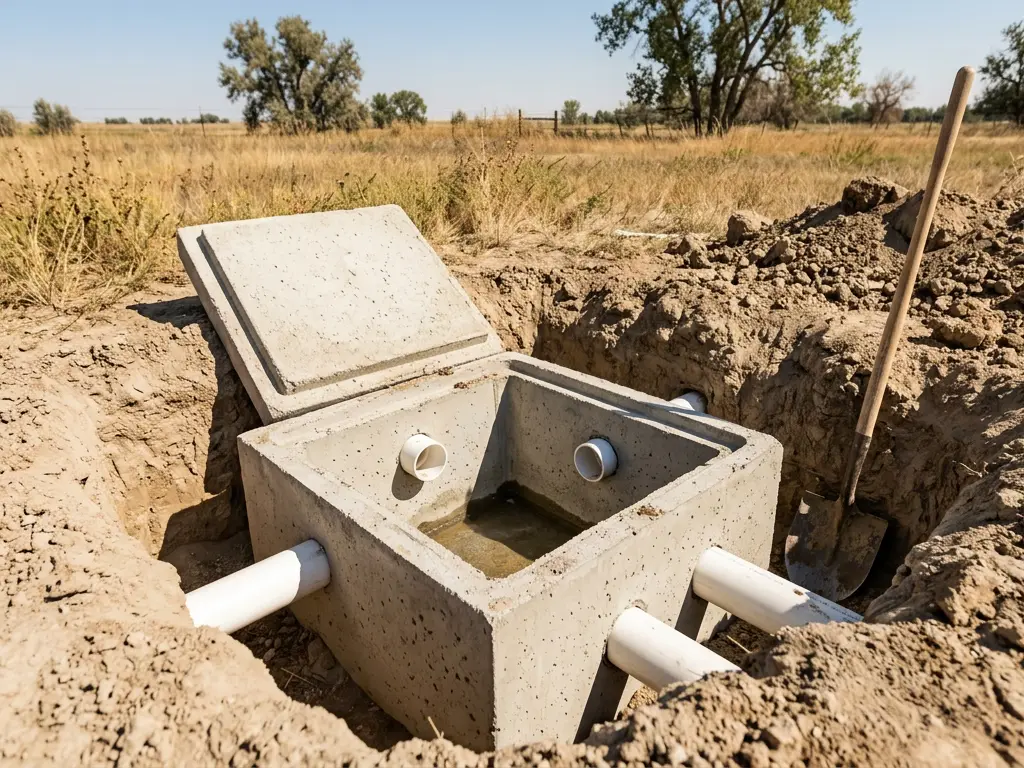
Most septic systems that fail early around Greeley were not unlucky. Something cheap was skipped, or something heavy was put where it should not go.
- Greeley and nine towns within 20 miles
- Written price before any digging
- Licensed, insured local contractors
- Weld and Larimer County rules covered
Greeley Quality Septic sees the same handful of mistakes behind most early septic failures. None of them is dramatic, and every one of them is far cheaper to avoid than to fix. Here they are, roughly in order of how much they end up costing.
1. Waiting for a problem before pumping
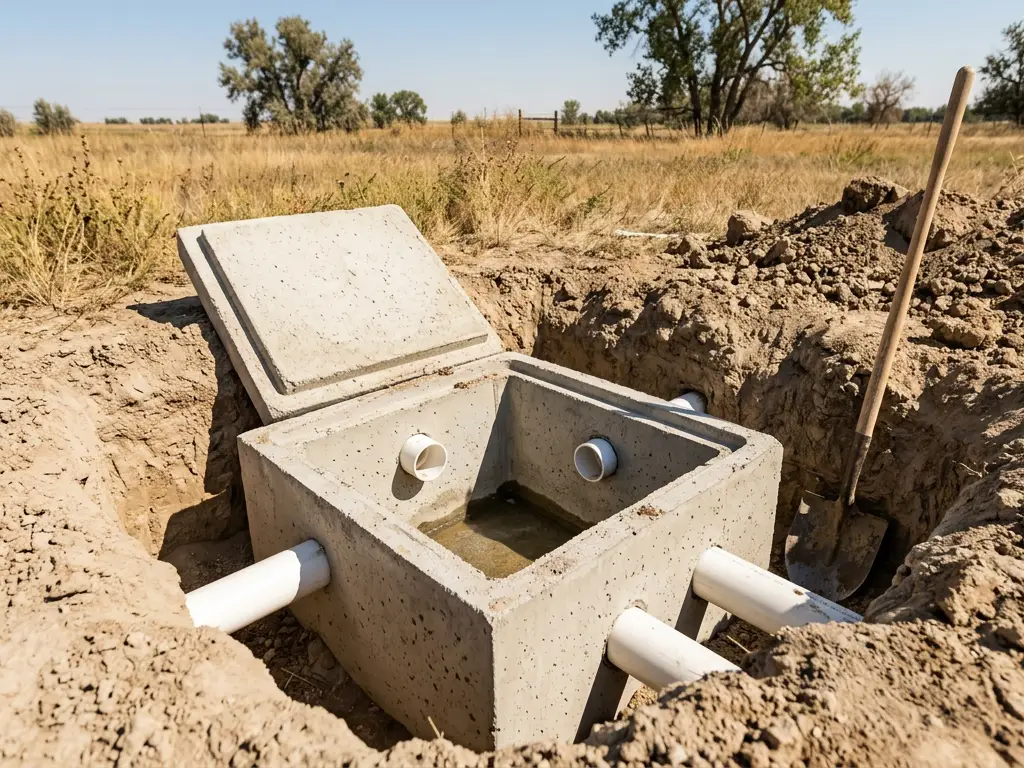
The tank gives no warning while it fills. By the time drains slow or the yard smells, solids may already have reached the field. A pump-out every two to four years, typically $475 to $800 around Greeley, is the cheapest protection the system has. Waiting until it backs up can turn it into a field replacement at $22,000 to $29,000, which is the whole reason the schedule exists.
2. Treating the field like the rest of the yard
The leach field is soil doing work. Driving or parking on it, letting livestock stand on it, building a shed or a driveway over it, or piling snow cleared from the drive onto it, all compact the soil and crush pipes. On acreage around Greeley, horse pens and equipment parking over the field are common causes of early failure.
Not sure what the system needs? Describe what you are seeing and get a straight answer on what it usually takes.
Call (970) 442-70723. Planting trees over or beside it
Cottonwoods and willows, the trees that thrive along every irrigation ditch here, chase water, and a leach line is water. Their roots fill pipes and trenches. Keep trees well away from the field and plant grass over it.
4. Letting irrigation water reach the field
A field is sized for the house's wastewater, not for lawn sprinklers, a roof downspout or ditch water. Around Greeley, where yards are irrigated through dry summers, a sprinkler zone over the field or a downspout aimed at it can saturate it. Keep surface water and irrigation off the system, and remember Weld County's setbacks put a field at least 50 feet from an irrigation ditch for a reason.
5. Pouring additives instead of pumping
Septic additives promise to break down solids so you can pump less. Weld County's own advice is that additives are unnecessary, some chemical ones can harm the soil in the field and the groundwater, and the money is better spent pumping the tank.
6. Using the drains as a trash can
Wipes labelled flushable, grease, coffee grounds, paints, solvents and medications all cause trouble. Drain cleaners are the worst: a small amount kills the bacteria the tank depends on. A garbage disposal is not a mistake on its own, but it adds solids and shortens the pumping interval.
Not sure what the system needs? Describe what you are seeing and get a straight answer on what it usually takes.
Call (970) 442-70727. Doing all the laundry on one day
Ten loads on a Saturday sends hundreds of gallons through the tank faster than solids can settle, and pushes them toward the field. Spreading laundry over the week is free and makes a real difference on the slow clay soils west of Greeley.
8. Adding bedrooms without checking the system
Colorado sizes tanks by bedrooms: 1,000 gallons for two or three, 1,250 for four, and 250 more for each one after that. Finishing a basement with two bedrooms, or adding an accessory dwelling, puts more water through a system designed for fewer people. In Weld County a zoning permit or a bedroom addition can trigger a county review of whether the existing system is adequate. Check before building, not after the field fails.
9. Buying without an inspection
In Weld County no septic inspection is required when a house is sold, so buyers skip it. A septic inspection, typically from about $475, is the cheapest moment to find a failing field, because it is before you own it. In Larimer County the seller has to provide one, but a buyer should still read the report.
The common thread
Almost every mistake on this list lets solids or extra water reach the field. The tank and its baffles are there to stop solids; the field is sized for a certain amount of water. Keep both within design, and a system on decent ground around Greeley can last decades. On the tight Nunn clay loams around Berthoud and Loveland, there is less margin, so the same mistakes cost more, sooner.
If a mistake has already happened
If a field has been driven on, flooded or overloaded, the best first step is a pump-out and an honest look at whether water is returning from the field. Sometimes resting the field and fixing the cause is enough. If not, a leach field repair caught early is far cheaper than a full replacement.
A simple calendar that avoids all nine
- Every two to four years, pump the tank and keep the receipt with the sludge and scum depths written on it
- At every pump-out, have the baffles checked and the effluent filter rinsed
- Every spring, walk the field and look for wet spots, settling and new tree growth
- Every summer, check that sprinklers and downspouts are not watering the field
- Before any remodel that adds a bedroom, check the system's design size with the county
- Before buying or selling, get an inspection, whatever the county requires
None of that costs much, and together it covers every mistake above. Keep the receipts and notes in one folder with a sketch of where the tank, the distribution box and the field lines sit, measured from two corners of the house. That folder is what a buyer, an inspector or the next pumping crew will ask for, and it saves paying someone to find the tank again. Weld County's own recommendation goes further and suggests an inspection every year, which is the surest way to learn how fast your household fills its tank.
Questions people ask
What ruins a septic system the fastest?
Skipping pump-outs, driving or parking on the field, and sending excess water or solids to it.
Are septic additives bad?
Weld County calls them unnecessary and warns that some chemical additives can harm the field and groundwater.
Can trees damage a leach field?
Yes. Water-seeking trees such as cottonwoods and willows send roots into pipes and trenches. Keep them well away.
Is it bad to do lots of laundry on a septic system?
Many loads in one day push solids through the tank before they settle. Spread laundry over the week.
Do I need to check my septic before adding a bedroom?
Yes. Colorado sizes tanks by bedrooms, and Weld County may review the system when a bedroom is added.
Talk it through before anyone digs
Say what the house is doing, how old the system is and when the tank was last pumped. You will hear what the job usually involves, what it tends to cost, and whether it needs digging at all.
Call (970) 442-7072